Why your houseplant's leaves turn yellow, and how to fix it
Yellow leaves are a symptom, not a diagnosis. Here is how to tell overwatering from light, feeding, and simple old age.
AI-generated image
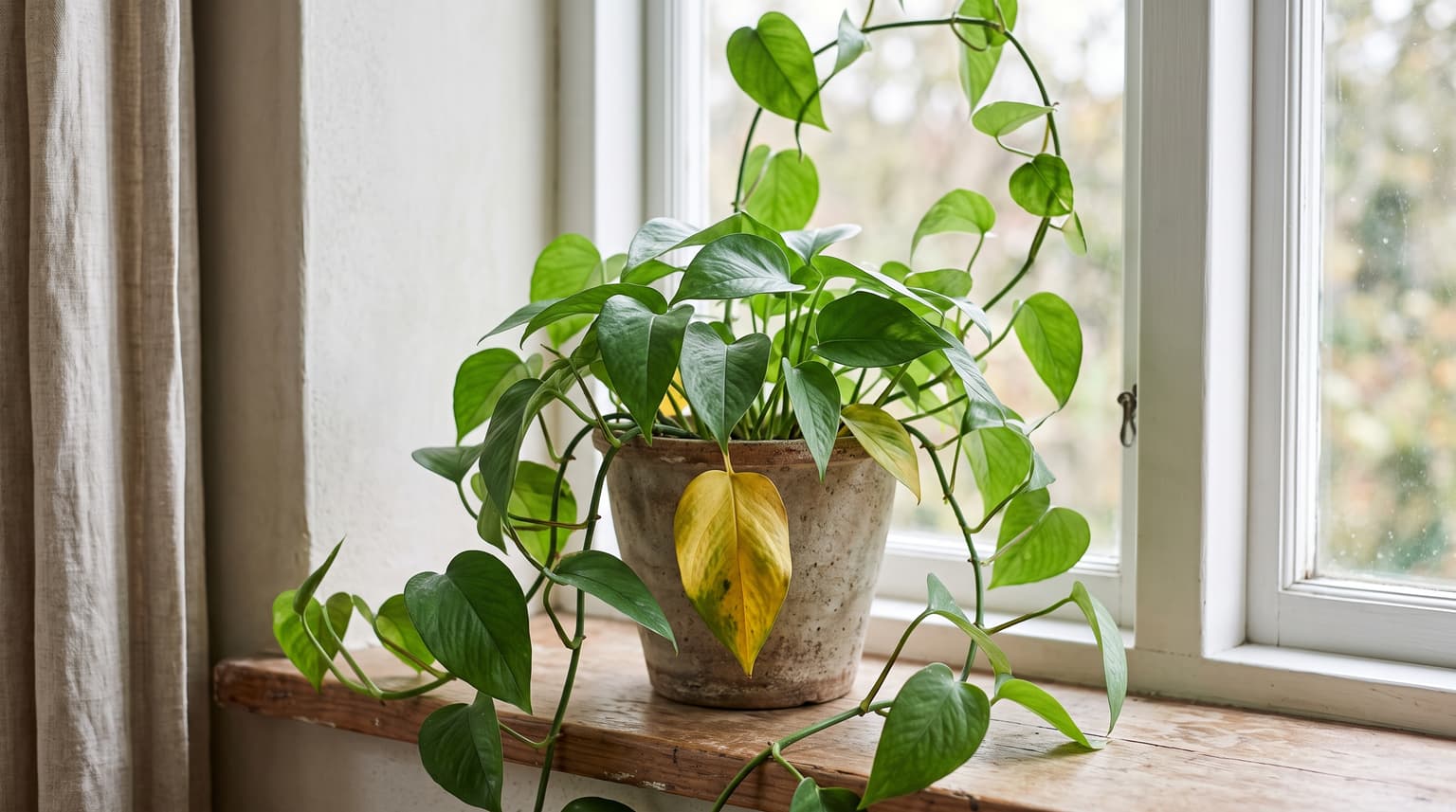
A yellow leaf on a houseplant sets off a small panic, and the usual response is to water it, which is often the exact wrong move. Yellowing is a symptom with several possible causes, and they call for opposite fixes. Work through them in order instead of guessing, and most cases sort themselves out.
Most yellow leaves are a watering problem
If a houseplant is unhappy, watering is the first thing to check, and overwatering is far more common than underwatering. Roots need air as well as water. Sit them in soggy soil for too long and they start to rot, which stops the plant taking up water, which makes the leaves yellow and droop. It looks like thirst, so people water more, and make it worse.
Two clues tell overwatering from underwatering:
- Overwatered leaves often turn yellow while staying soft or limp, usually starting with the lower, older leaves. The soil feels wet, and the pot may smell sour.
- Underwatered leaves tend to go yellow or brown and crispy, the soil is dry and may have pulled away from the sides of the pot, and the whole plant looks deflated.
The fix for most houseplants is the same: water thoroughly when the top two to three centimetres of soil are dry, let the excess drain away, and never leave the pot standing in a full saucer. How often that works out to depends on the plant, the pot, and your home, which is why a finger in the soil beats any fixed schedule.
When it is light, not water
If watering checks out, look at light. A plant that is not getting enough drops its lower leaves to save energy, and those leaves yellow on the way out. Growth gets leggy, reaching toward the nearest window, and new leaves come in smaller and paler.
The answer is usually to move it closer to a window rather than to buy equipment. Most common houseplants want bright, indirect light, which means near a window but out of the harshest direct sun. A plant sitting in a dim corner two metres from the glass is surviving, not growing, and slow decline often shows up as yellowing.
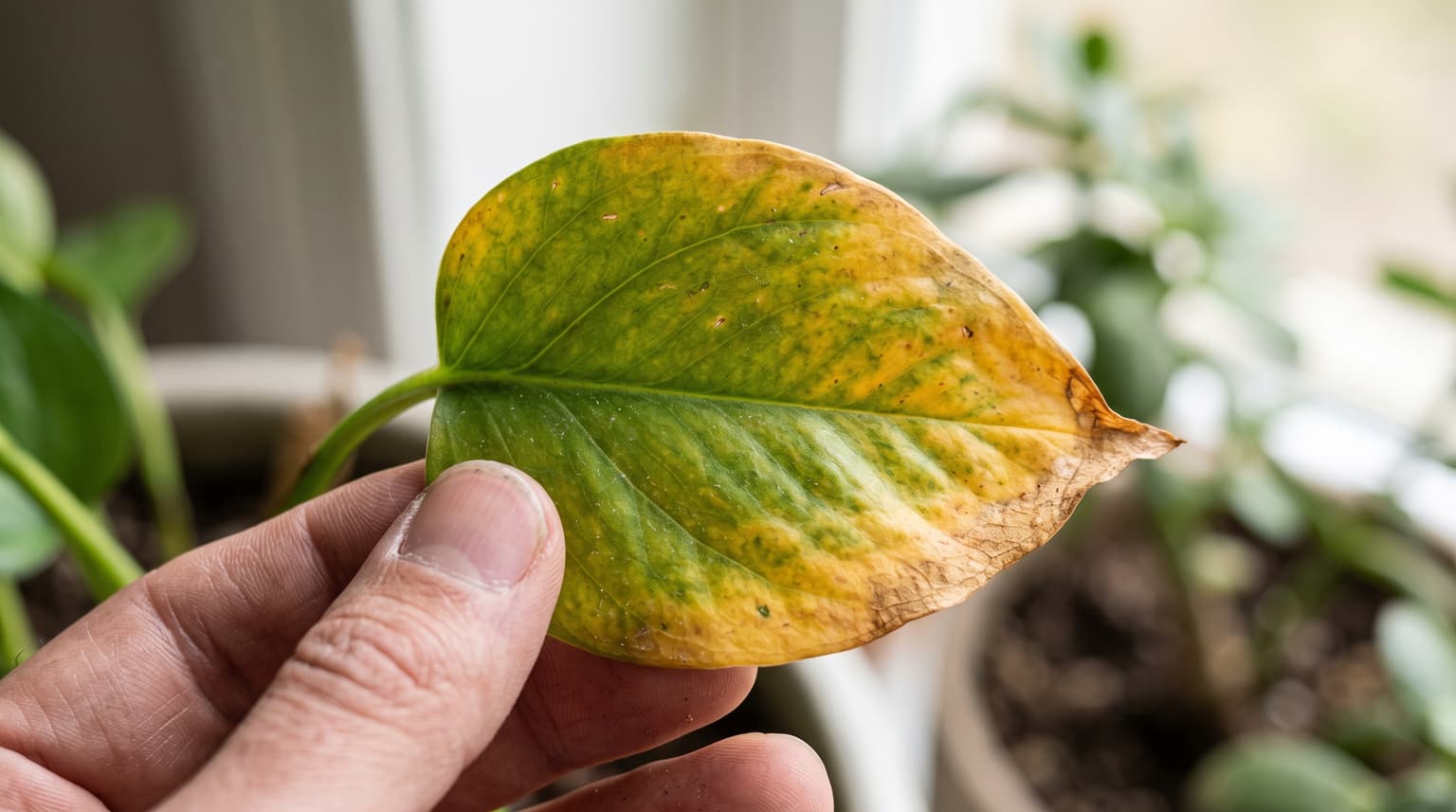
Direct sun can cause the opposite problem on plants not used to it: pale, bleached, or scorched patches rather than an even yellow. If leaves fade on the side facing a bright window, filter the light with a sheer curtain or shift the plant back a little.
AI-generated image
Hunger, and plain old age
Plants in pots eventually use up the nutrients in their soil, especially if they have been in the same pot for a year or more. A hungry plant often yellows evenly, with slower growth and smaller new leaves. A balanced houseplant feed through the growing season, used at the strength on the label, usually turns this around. Do not overfeed, which can burn roots and cause its own brown leaf tips.
And sometimes a yellow leaf means nothing is wrong. The oldest leaves, lowest on the plant, naturally yellow and drop as the plant puts energy into new growth. One or two lower leaves going over while the rest of the plant looks healthy is normal. Pull them off and move on.
A ten-minute diagnosis
When a leaf yellows, run through this before you do anything:
- Feel the soil. Wet for days points to overwatering and drainage. Bone dry points to underwatering.
- Check which leaves. Lower and older is usually water or normal ageing. All over, including new growth, leans toward light or feeding.
- Look at the light. Has the plant been in a dim spot, or has the season changed and the light with it?
- Think about the calendar. When did you last repot or feed? A plant more than a year in the same soil may simply be hungry.
Change one thing at a time and give it a week or two. Plants respond slowly, and stacking three fixes at once just means you never learn which one worked.