Understand your soil before you plant anything
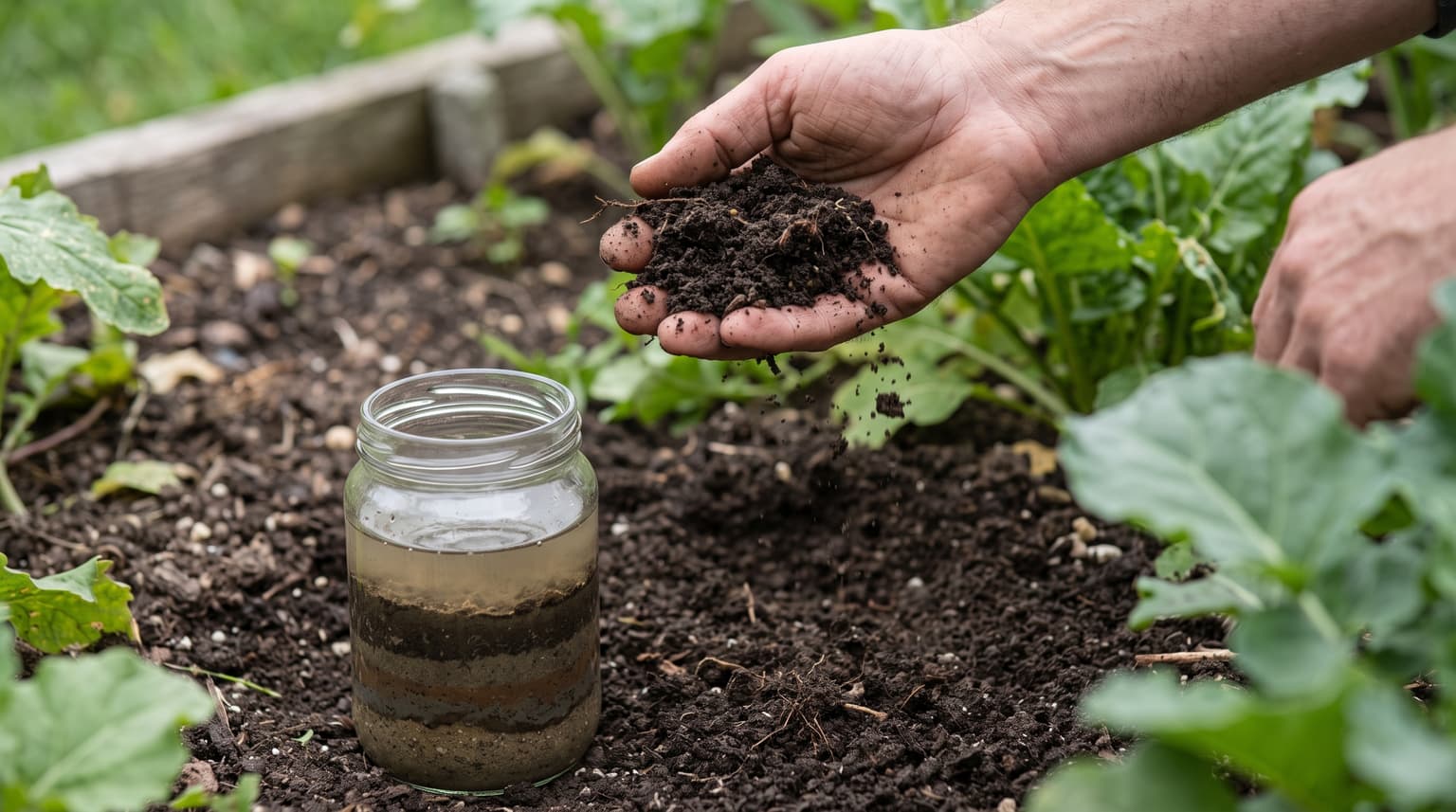
A jar, some water, and ten minutes will tell you more about your garden than most plant labels ever will.
AI-generated image
It is tempting to start a garden at the plant end: choose what you like, bring it home, put it in the ground. But the ground is doing most of the work, and ten minutes spent understanding your soil will save you far more than ten minutes spent reading plant labels. Your soil decides what will thrive, how often you water, and how much your plants struggle or sail.
Why soil comes first
Soil is not just something to hold plants upright. It stores water and nutrients, holds air around the roots, and houses the vast web of organisms that feed plants. Two gardens a street apart can have completely different soil, and the same plant will flourish in one and sulk in the other. Knowing which you have turns guesswork into decisions.
The property that matters most to a beginner is texture: the balance of sand, silt, and clay. It governs drainage, how quickly soil dries out, and how easy it is to dig, and you can read it with nothing more than a jar.
The jar test, step by step
This simple test separates your soil into its components so you can see the balance for yourself.
- Fill a straight-sided jar about a third full with soil from the spot you plan to plant, digging a little below the surface rather than scraping the top.
- Top up with water until the jar is nearly full, leaving a little air gap.
- Add a small drop of dish soap, which helps the particles separate.
- Put the lid on and shake hard for a couple of minutes until the soil is fully broken up.
- Set it down somewhere it will not be disturbed, and leave it. Sand settles within a minute, silt over a few hours, and clay can take a day or more.
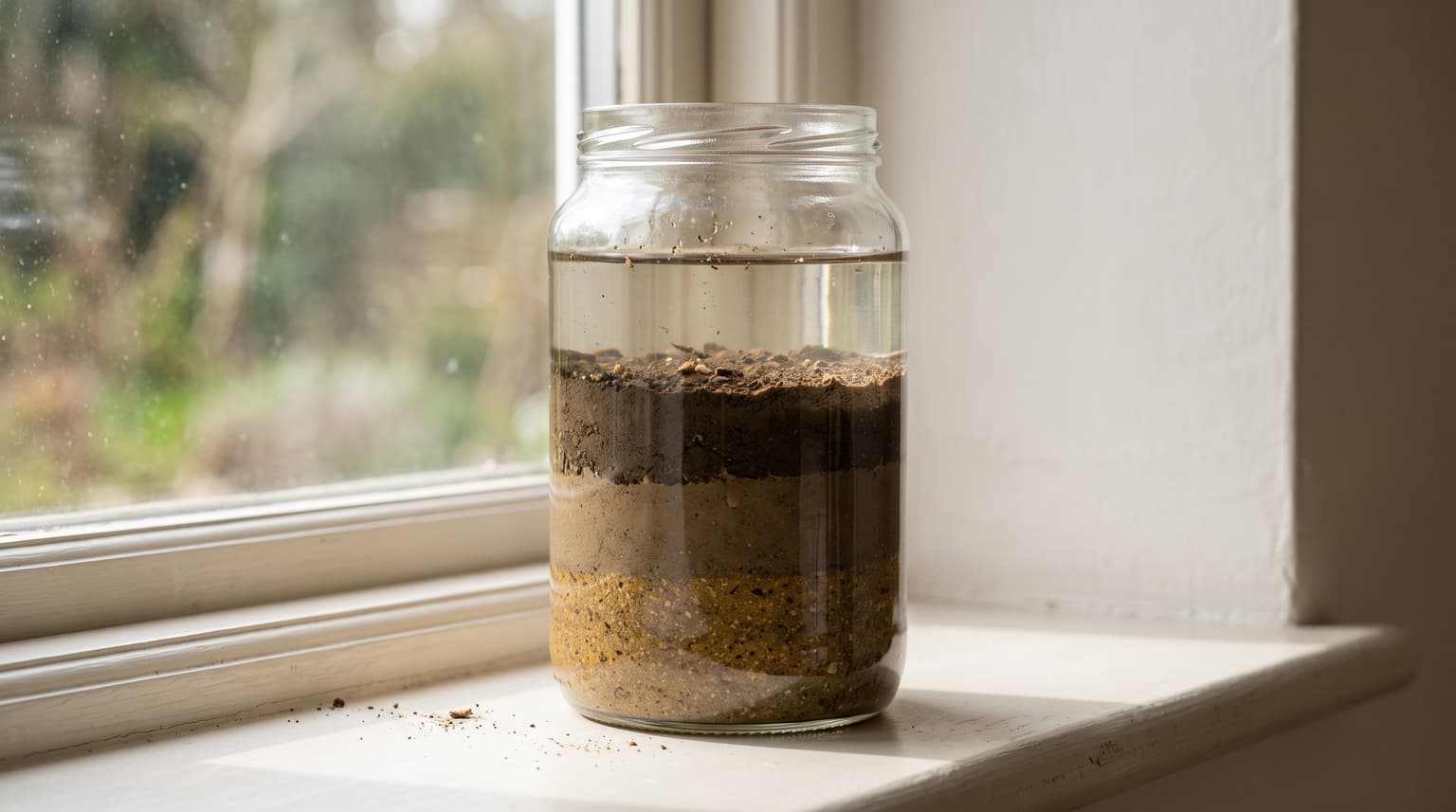
When it has settled, you will see bands. Sand is the gritty layer at the bottom, silt the smoother layer above it, and clay the finest layer on top, with the water often still cloudy. The relative thickness of the bands tells you your soil type.
AI-generated image
What your result means
Sandy soil (a thick bottom band) drains fast, warms up early, and is easy to dig, but it dries out quickly and nutrients wash straight through. You will water and feed more often. It suits plants that like sharp drainage and hate wet feet.
Clay soil (a thick top band) holds water and nutrients well, which is a real advantage, but it is heavy, slow to warm, and can waterlog in winter and bake hard in summer. Worked well, it grows excellent gardens. Worked when wet, it sets like concrete.
Loam (a fairly even mix) is the soil everyone wants: it drains yet holds moisture, is rich and easy to work. If this is roughly what you have, count yourself lucky and concentrate on keeping it that way.
It is also worth knowing your soil's pH, how acidic or alkaline it is, because a few plants are fussy about it. A cheap test kit from a garden centre covers this, and for most ordinary planting the texture matters more.
Improving almost any soil
Here is the reassuring part: the fix for nearly every soil problem is the same, and it is organic matter. Well-rotted compost or manure, dug in or spread as a mulch, improves everything at once.
In sandy soil, organic matter acts like a sponge, helping it hold water and nutrients. In clay soil, it opens up the structure, improving drainage and making it easier to work. You do not need to replace your soil or truck in something new. Add organic matter every year, avoid digging or walking on beds when they are sodden, and keep the surface covered, and almost any soil moves steadily toward that ideal loam over a few seasons.