A first vegetable garden you can actually keep up with
Five crops that reward beginners, how much space they need, and a planting order that spreads the work out.
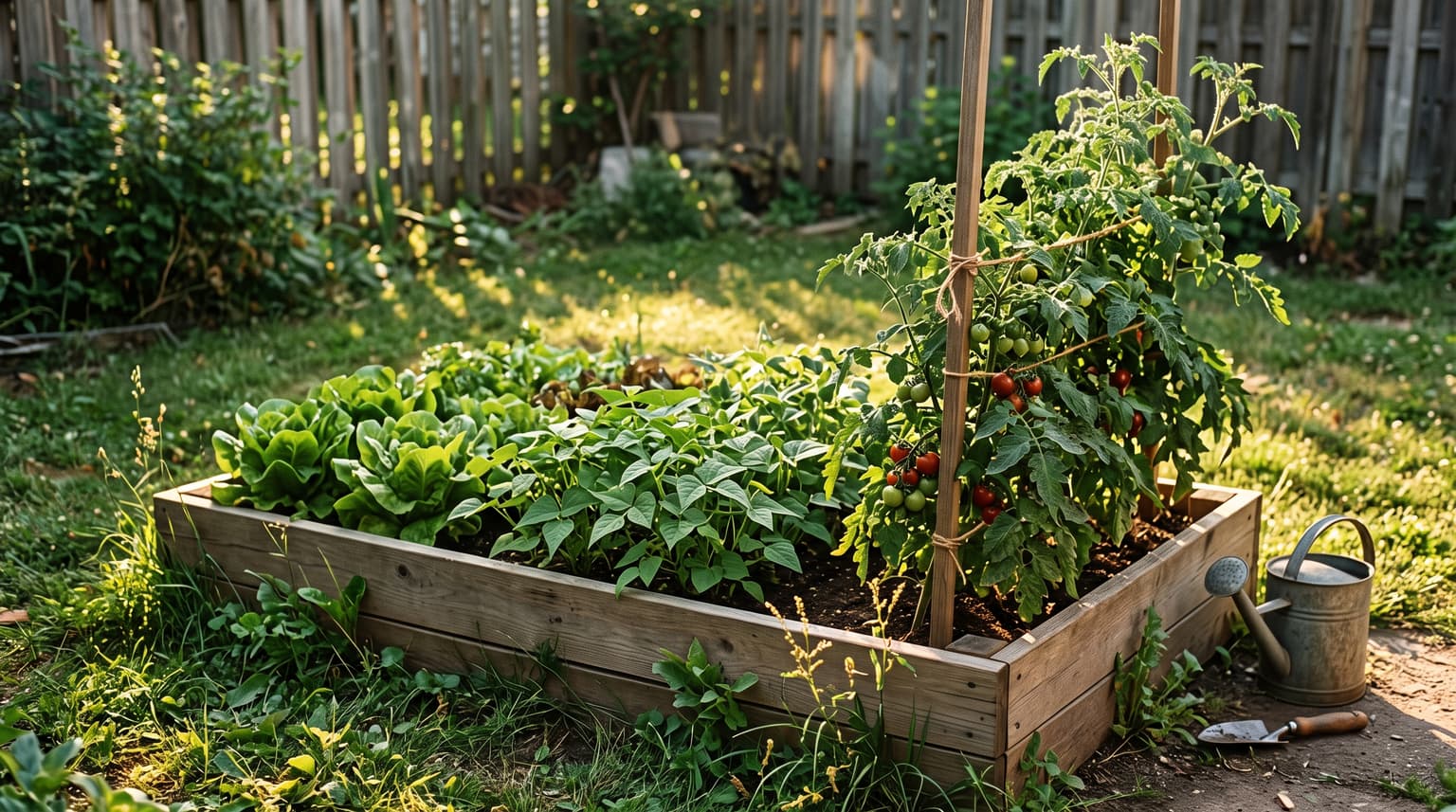
AI-generated image
The standard advice for a first vegetable garden is to grow what you eat. It sounds obvious and it is often wrong, because the things you eat most are not always the things that are easy to grow. A better rule for year one is to grow what is hard to kill and quick to reward. You get food on the table, a few early wins, and the confidence to try the fussier crops later.
Five crops that reward beginners
These five are forgiving, productive, and genuinely useful in the kitchen. None of them needs special equipment, and all of them will grow in a bed or in large pots on a sunny balcony.
- Salad leaves are the fastest reward in the garden. Sow a short row, start cutting in a few weeks, and sow again every couple of weeks for a steady supply.
- Bush beans crop heavily for the space, do not need staking, and shrug off neglect. A handful of plants keeps a household in beans through their season.
- Radishes go from seed to plate faster than almost anything, which makes them perfect for keeping children, and impatient adults, interested.
- Courgettes (zucchini) are almost comically productive. One or two plants is plenty, and the main skill is picking them before they turn into marrows.
- Cherry tomatoes ask a little more, but they reward it. They want sun, water, and something to climb, and they out-produce the big slicing types with far less fuss.
AI-generated image
The five, at a glance
| Crop | Sun | Spacing | Sow to first pick |
|---|---|---|---|
| Salad leaves | Partial to full | Scatter thinly, thin to 10 cm | 3 to 5 weeks |
| Radishes | Partial to full | 2 to 3 cm apart | 4 weeks |
| Bush beans | Full sun | 10 to 15 cm apart | 8 to 10 weeks |
| Courgette | Full sun | 1 plant per 90 cm | 7 to 8 weeks |
| Cherry tomato | Full sun | 1 plant per 45 to 60 cm | 10 to 12 weeks |
How much space you actually need
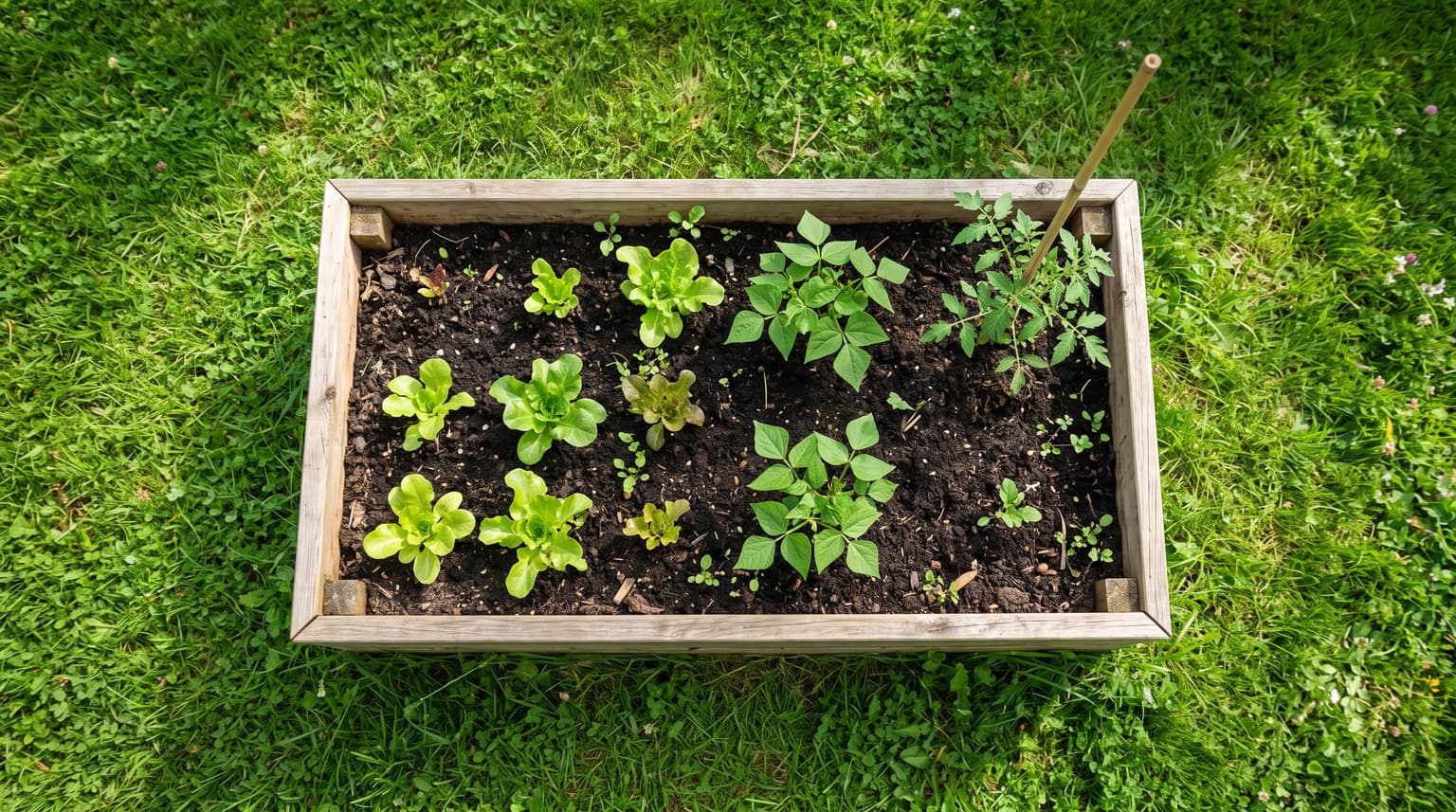
Less than you think. A single raised bed roughly one metre by two fits all five crops: a block of salad and radish at the front where you can cut them easily, beans along one side, and the courgette and tomato at the back where their size will not shade everything else.
No bed? Large pots do the job, one plant to a pot for the courgette and tomato, and a wide, shallow container for salad and radish. The one rule that does not bend is sun. The fruiting crops, beans, courgette, and tomato, want six hours or more of direct sun to produce well. Give them less and they grow, but the harvest drops off sharply.
A planting order that spreads the work
Putting everything in on the same weekend means everything needs attention on the same weekend, and everything finishes at once. Stagger it instead:
- Start with salad and radish as soon as your soil is workable and frost has passed. They are quick and cold-tolerant.
- Sow beans once the soil has warmed, a week or two later, since they sulk in cold ground.
- Put in the courgette and tomato last, when nights are reliably mild, as starter plants if you want to save weeks.
- Keep sowing a short row of salad every two weeks. This “little and often” habit is what keeps a steady supply coming rather than a glut and then nothing.
Keeping up without it taking over
The work of a small vegetable garden is mostly watering, a little weeding, and picking. Water deeply and less often rather than a daily splash, which encourages roots to go down and makes plants more resilient. Pull weeds while they are small, when it is a two-minute job rather than an afternoon.
Then pick often, and pick young. Beans, courgettes, and salad all produce more the more you harvest, and they get tough or bitter if left too long. The garden that feeds you is the one you visit, so keep it where you walk and keep the visits short.