Easy flowers that bloom the first year from seed
Hardy annuals that go from a cheap packet of seed to a full bed of colour in a single season.
AI-generated image
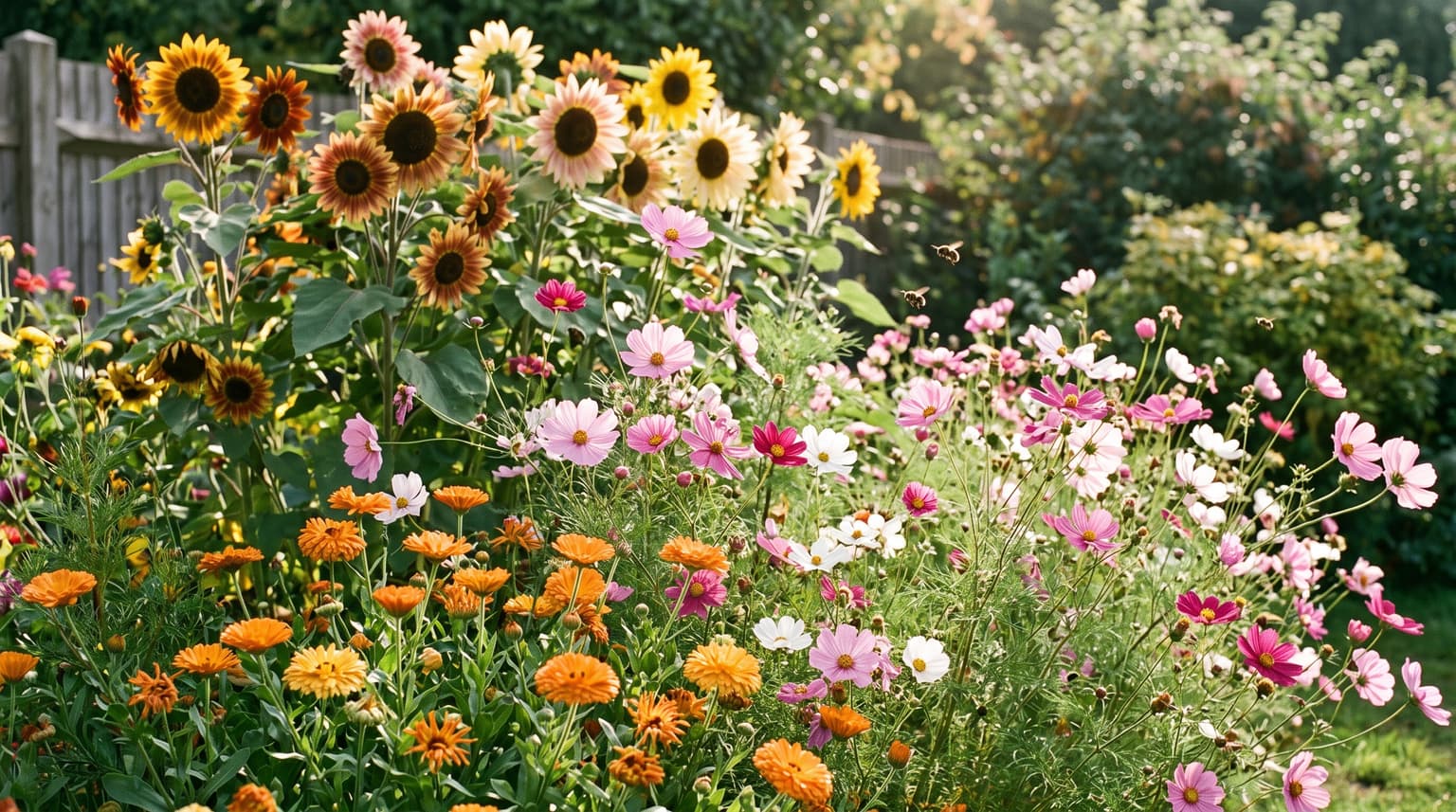
Perennials, the plants that come back year after year, are a long game. Many give little in their first season while they settle in. If you want colour this year, from a bed that is currently bare, the answer is hardy annuals: flowers that grow, bloom, set seed, and finish all in one season, and most of them do it from a cheap packet of seed sown straight into the ground.
Why hardy annuals are the beginner's flower
“Hardy” means they tolerate cold and can be sown early, directly where they are to grow, without fussing over seed trays and windowsills. “Annual” means they race through their whole life in a few months, so they flower fast. A packet costs about the same as a single potted plant and can fill a whole bed.
The trade is that they last one season. But that is also freedom: you get a long display for very little money, and next year you can try something different, or let the best ones self-seed and come back on their own.
AI-generated image
Five that rarely fail
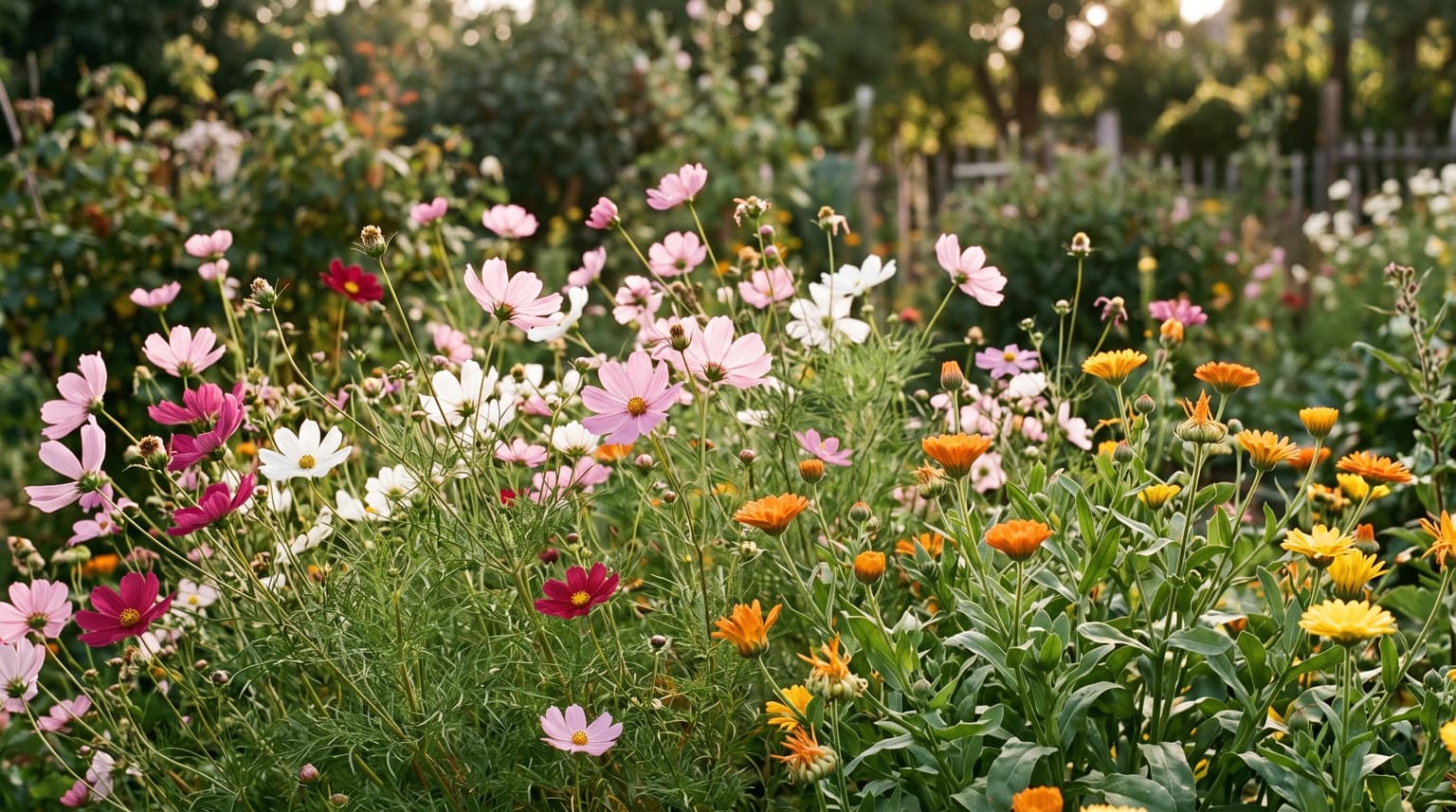
- Calendula (pot marigold) is about as easy as flowers get. It germinates quickly, flowers for months, copes with poor soil, and self-seeds freely for next year.
- Cosmos grows tall and airy and flowers right up to the first frost, especially if you keep picking it. It thrives in poorer soil, where rich ground just gives leaf at the expense of flower.
- Sunflowers are the most satisfying thing a beginner can grow, and children love them. Sow the large seeds straight into the ground and give the tall types some shelter from wind.
- Nasturtiums grow from big, easy seeds into a tumble of flowers and leaves, both of which are edible with a peppery kick. They actively prefer poor soil and little feeding.
- Nigella (love-in-a-mist) is tough, pretty in flower, and leaves behind architectural seed pods. It self-seeds so reliably that one sowing often becomes a permanent feature.
How to sow them
Most hardy annuals are sown directly into the soil where they will flower, which is why they suit beginners. The method is simple and much the same across all five:
- Wait until the soil is workable and starting to warm in spring. A packet will give the right window for your area.
- Clear the patch of weeds and rake the surface until it is reasonably fine and level.
- Sow thinly, at the depth on the packet, which is roughly twice the seed's own diameter. Big seeds like sunflowers go deeper, fine seeds barely covered.
- Water gently with a fine spray and keep the soil from drying out until seedlings appear.
- Thin the seedlings to the spacing on the packet. It feels brutal to pull out healthy plants, but crowded annuals stay small and flower poorly.
Choose a sunny spot for all of these. Most annual flowers want full sun to bloom well, and most of them flower better in ordinary or even poor soil than in rich ground, which tends to produce lush leaves and few flowers.
Keeping the bed in bloom for longer
The one habit that doubles your display is deadheading: removing flowers as they fade, before they set seed. An annual's whole purpose is to make seed, and once it succeeds it starts to shut down. Keep removing the spent flowers and the plant keeps making new ones, trying again, often for months longer than it otherwise would.
Toward the end of the season, stop deadheading a few of the best plants and let them set seed. Calendula, nigella, and nasturtiums in particular will drop seed and come up by themselves next spring, turning a one-year display into a self-renewing one for no extra cost or effort.